Iran-Allied Forces Win Majority in Iraqi Election
17 NOV 2025 06:28
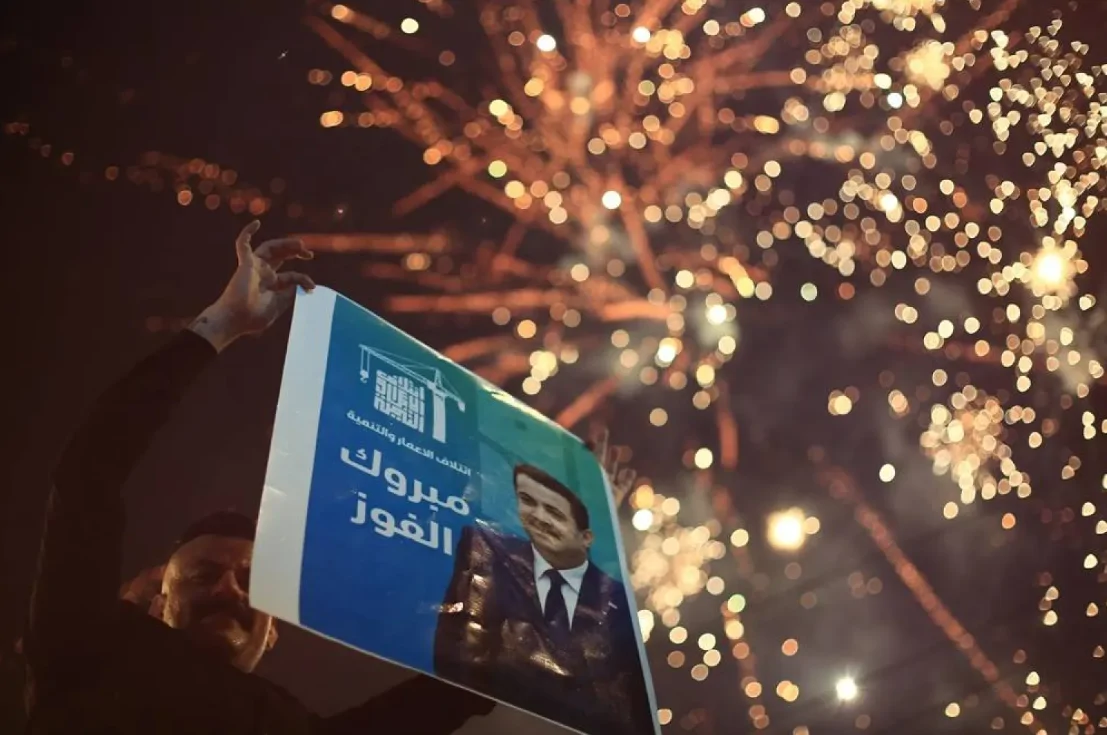
Iran-Allied Forces Win Majority in Iraqi Election
17 NOV 2025 06:28
The victory of political and paramilitary forces with close ties to Iran in the recent parliamentary elections in Iraq has given rise to serious concerns among regional observers. Experts agree that the election results not only reflect the internal alignment of forces but also vividly testify to the deep penetration of Iran's influence in Iraq's political system. The consequences of these developments could be much more dangerous than they seem at first glance.
As a result of the elections, the structures that form the backbone of the "Hashd al-Shaabi" movement—a coalition recognized as "terrorist" by the United States—have gained a significant presence in parliament. Specifically, the "Asa'ib Ahl al-Haq" group received 27 mandates, the "Imam Ali Brigades"—8, "Iraqi Hezbollah"—6, and the "Sayyid al-Shuhada Brigades"—4 seats. They are also joined by "Rayan al-Kildani," who has close ties to Tehran, with 2 mandates. It is noteworthy that the "Badr" organization, which operates within the same forces but is not recognized as terrorist by Washington, has also achieved significant success, securing 18 seats in parliament.
The political parties of the pro-Iranian camp have also strengthened their positions. The party led by Nouri al-Maliki received 28 mandates, and Ammar al-Hakim's alliance—15. If we add to this list the "Patriotic Union of Kurdistan," which is closely linked to Iran and led by the Talabani family, as well as a number of smaller groups, it becomes clear that the number of deputies under the direct or indirect influence of Tehran exceeds 153.
Against this backdrop, the major Sunni alliances, "Taqaddum" (about 36 seats) and the "Azm" coalition (about 18 seats), are not seen as forces capable of resisting Iranian influence. The seriousness of the situation is underscored by the example of the former speaker of parliament, Mohammed al-Halbousi. He was removed from his post precisely for showing resistance to Tehran and was given the opportunity to return to politics only on the condition of completely abandoning his anti-Iranian line. This indicates that Iran's influence in Iraq's political field has become a decisive factor.
These developments have not gone unnoticed by the United States. Some experts attribute the recent tightening of Trump's anti-Iranian rhetoric partly to these developments as well.
Related Reads
Sign in or create a free ReOpen Media account to post comments